
3 Mistakes When Responding to Spills in Manufacturing & Industrial Sites
In manufacturing, spills happen. And whether they’re the result of equipment failure or human error. Their timing is usually unpredictable. Cleaning up an incidental spill as efficiently as possible helps keep your staff and your site safe.
But first, what is an incidental spill?
Spills are classified into two main groups: emergency spills and incidental spills. An incidental spill is a spill that does not pose a significant safety or health threat to employees in the immediate area and does not have the potential to quickly escalate into an emergency.
Cleaning up incidental spills haphazardly can be a major liability for businesses. Here are three mistakes manufacturers and industrial sites make when responding to spills, and how they can avoid them while keeping staff protected.
- Not having a spill response plan or regular spill education
Safety comes first in manufacturing and putting off safety training can have serious consequences. Make sure your team members, both experienced and inexperienced, are kept up to date on your company’s spill prevention and response protocols. When a spill occurs, employees can respond quickly and confidently when they are well trained. An effective spill response strategy is specific to your site, but should include the following nine steps:
- Recognize – Identify the spill and its source
- Assess – Evaluate risks of environmental contamination
- Protect – Retrieve your spill kit supplies and apply your PPE
- Isolate – Set a perimeter, removing team members and ignition sources
- Notify – Report the spill to your supervisor or safety team
- Contain – Use absorbent socks or booms to incircle the spill, stopping its spread
- Clean – Absorb the spill using the proper spill response kit supplies like absorbent pads
- Dispose – Follow environmental regulations when disposing of materials
- Document – Analyze the spill and its cause to prevent future accidents
By keeping this process top of mind for employees through training, signage and readily available absorbent products, your site can keep lines moving and staff safe.
- Using the wrong spill kit
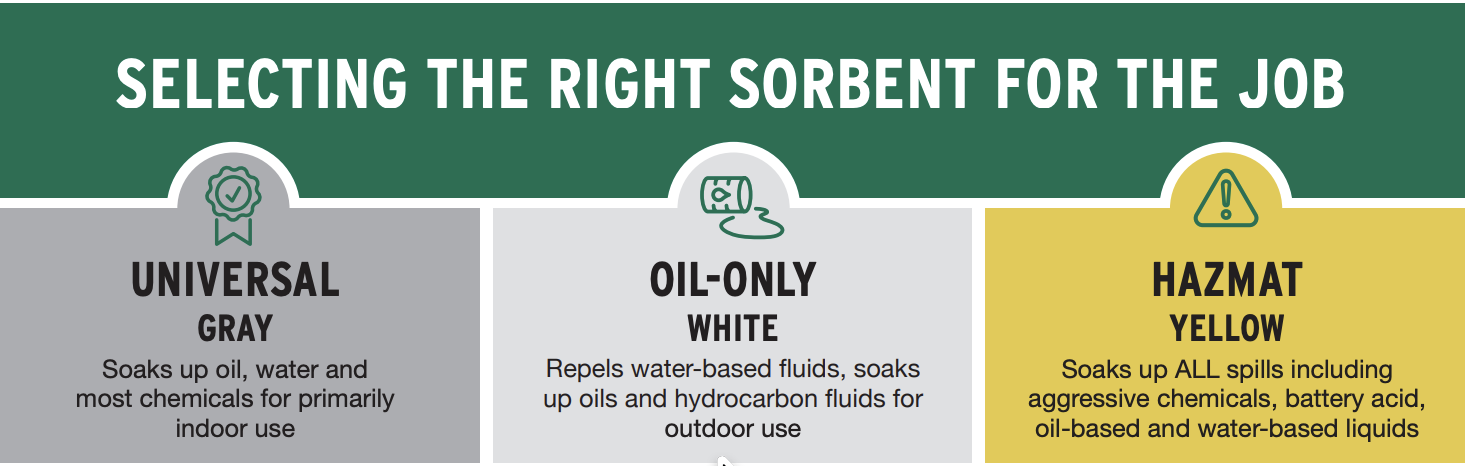
When spills happen, having the right spill kit can make all the difference. Absorbent products and spill kits are designed to handle various liquids effectively and safely. It's crucial to first assess the spill to identify the best absorbent product to rectify it. At Sellars, we offer three classes of absorbents in easy-to-understand colors. Using the right material and weight gets spills cleaned up fast and in the most cost-effective way.
- Universal absorbents soak up oil, water and most chemicals
- Oil-only absorbents repel water-based liquids, soaking up oils and hydrocarbon fluids
- Hazmat absorbents absorb aggressive chemicals, battery acid and oil- or water-based liquids.
- Containing & cleaning the spill too late
When cleaning up a spill, timing is everything. When a spill spreads, the chance of equipment damage and personnel injuries increases. The first step to prevent injury is to quickly identify where the spill is coming from, like a leaky valve or drum, and stop it at the source. Then, it’s time to address the spill itself by containing it using absorbent booms and socks. These absorbent products create a barrier to stop the spill from spreading, making clean-up easier and the risk of employee injuries lower. Next, place the proper absorbent products within the encircled spill and let them soak it up.
Sellars manufacturers absorbents products for industrial, manufacturing and automotive industry spill control. From full spill kits to absorbent pads, our team offers the tools your site needs to keep sites safe when spills occur. Browse our absorbent products to learn more.
Recent Posts
-

3 Mistakes When Responding to Spills in Manufacturing & Industrial Sites
In manufacturing, spills happen. And whether they’re the result of equipment failure or human error. …Sep 18th 2026 -

4 Ways Disposable Wipers Help Improve Industrial Safety
Industrial sites and manufacturing facilities can present unique safety challenges. But safety plans …Aug 31st 2026 -
Tiny Fibers, Big Problems: Reducing Lint Contamination in Manufacturing
Whether manufacturing large vehicles or tiny microchips, microscopic fibers in cleaning towels can c …Jul 31st 2026