
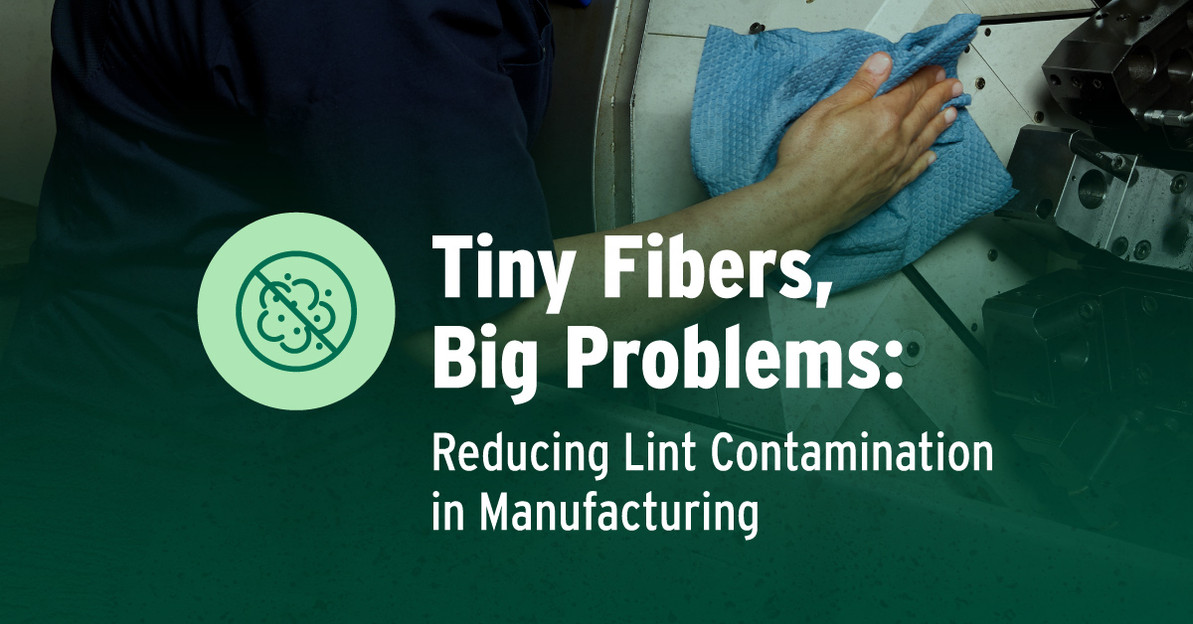
Tiny Fibers, Big Problems: Reducing Lint Contamination in Manufacturing
Whether manufacturing large vehicles or tiny microchips, microscopic fibers in cleaning towels can cause costly problems. However, routine cleaning is crucial to ensure machinery continues to run safely and efficiently. When cleaning critical equipment, not just any cleaning towels or wipers will do.
The wrong wipers can interfere with mechanical components, compromise quality and increase maintenance costs. For manufacturers, even small disruptions can be expensive. Siemens’ downtime research highlights the growing financial impact of unplanned downtime across industrial sectors, especially in automotive and other production-intensive environments. Choosing low-lint wipers helps reduce contamination while supporting cleaner equipment, safer operations and consistent product quality.
Here's a closer look at the risks of using the wrong wiping products—and what to look for when selecting a low-lint option.
Large Equipment Repairs
Cleaning equipment and mechanical components is essential to keeping operations running smoothly. But when the wrong wipers are used, this maintenance may do more harm than good. In industries like food processing, automotive, printing, aerospace and electronics, lint fibers can clog mechanical components or interfere with electronics, leading to equipment failure. Equipment failure causes downtime and unplanned downtime often results in costly repairs.
Defective Products & Rework
Maintaining product quality is crucial for any manufacturer. In highly controlled manufacturing environments, even the tiniest particles can create serious quality concerns, especially in industries such as pharmaceuticals, electronics and medical device manufacturing. Lint fibers can contaminate entire batches of product—and the damage may not be immediately apparent. The risks posed by lint contamination vary by industry:
- Printing: Lint fibers can cling to rollers or printing plates, causing inconsistent ink transfer or blurred images and ultimately ruining print runs.
- Automotive: In paint lines and body shop environments, lint can become embedded in wet paint or coatings, creating bumps, craters or surface imperfections that may require rework.
- Electronics: Lint fibers can interfere with sensitive components, causing short circuits, performance issues or product failures.
- Pharmaceuticals: Lint compromises sterile protocols and can breach safety standards, putting regulatory compliance at risk.
The Right Wipers Can Help
Not all wipers are created equal. Clean Task® Ultra Lo-Lint Wipers are engineered specifically for the most critical and sensitive wiping tasks. Made from a blend of cellulose and synthetic fibers, each wiper is exceptionally soft and flexible, making it ideal for cleaning equipment with industrial solvents. Spunlace substrate is made from a web of fibers, which are then bonded together using water jets. Spunlace is the lowest lint substrate, delivering superior durability and wet strength for tough wiping and cleaning applications.
Choosing the right dispensing format for your needs can be just as important as choosing the right wiper for efficiency, cost and ease of use.
- Quarterfold wipers are small and compact, perfect for on the workbench.
- Pop-up boxes Pop-up boxes support one-at-a-time dispensing, which can help reduce overuse and keep wipers protected from dirt, dust and debris until they are needed.
- Jumbo rolls are ideal for high-volume environments and can be mounted using a Wall Mount or placed on a portable Floor Stand.
Available in a variety of substrates, put-ups and strengths, Sellars wiping products are designed to excel in dozens of industries. Whether you’re cleaning sensitive equipment, protecting product quality or trying to reduce waste at the point of use, choosing the right wiper can help keep production moving. Explore Clean Task® wiping products to find the right fit for your application.
Recent Posts
-

4 Ways Disposable Wipers Help Improve Industrial Safety
Industrial sites and manufacturing facilities can present unique safety challenges. But safety plans …Aug 31st 2026 -
Tiny Fibers, Big Problems: Reducing Lint Contamination in Manufacturing
Whether manufacturing large vehicles or tiny microchips, microscopic fibers in cleaning towels can c …Jul 31st 2026 -

The Benefits of a Standardized, Multi-Site Wiper Program
One team member at a body shop may grab a shop rag to wipe up a few drops of oil. Another may reach …Jun 29th 2026