
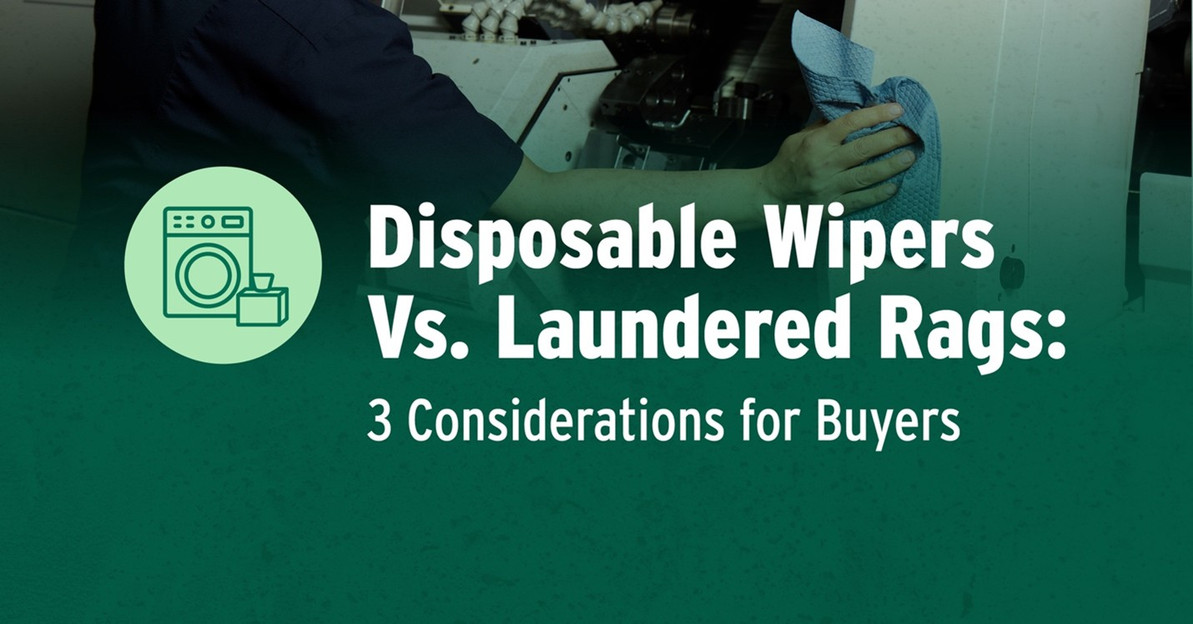
Disposable Wipers vs Laundered Rags: 3 Considerations for Buyers
Not all wiping tasks are created equal. And neither are laundered rags. While they may look the same, their past use can vary widely: wiping up water, metal shavings, oil, or even spoiled food. Depending on prior use, rags may shrink, stain or retain residual contaminants such as heavy metals. And while every laundered rag is cleaned regularly, not everything can be washed away.
In this article, we’ll compare laundered rags to high-quality, disposable wipers and explore the consistency, costs and contamination risks for each.
Consistency
Laundered rags aren’t task-specific. And it shows. When using the same rag for every task, you’ll find that they perform okay in some instances and disappointingly in others. That’s because not every cleaning and wiping task is one-size-fits-all. Task-specific cleaning products help deliver a more efficient, consistent clean. Each sheet is the same size, shape and color.
When you reach for a disposable wiper, like our Clean Task® All-Purpose Z400 Wipers, you know exactly what you’re getting. Dependable strength and absorbency for routine cleaning and wiping tasks around your facility, every single time.
Have a more heavy-duty task? Clean Task® Pro Strength T800 Wipers deliver greater durability and strength. Low-linting by design, T800 wipers are ideal for critical wiping tasks like cleaning automotive parts or machinery.
Contamination
Laundered rags may retain contaminants such as lead or fine metal shavings. Even in trace amounts, lead contamination can be extremely harmful to your staff over time. One study found that laundered rags from automotive shops retained 10% of lead contamination even after being laundered. It also found that contaminated rags can contaminate non-contaminated rags during the cleaning process.
In addition to leaving behind heavy metals, they can also leave behind lint, dirt and debris. In some cases, this isn’t significant, but when working with heavy machinery, printing presses or automotive parts, tiny lint can cause big problems.
Wipers like our Clean Task® Ultra Lo-Lint S700 are solvent safe, lint and contamination-free. Each sheet can be used until the job is complete and then tossed in the trash. No spreading of materials. No worrying about contamination. Ever.
Costs
When choosing laundered rags, you’re paying for more than just a rag. In addition to laundering services, your company can incur lost rag charges, transportation and fuel costs, and even energy surcharges. These charges may not be entirely disclosed, leaving your business with an unpredictable, fluctuating bill. The price per sheet for a disposable Clean Task wiper ranges from $0.03-$0.14, with cost-effective options for lighter duty tasks on the lower end and premium, heavy-duty performance on the higher end. Laundered rags will cost $0.15+ before the aforementioned charges. That cost difference adds up fast.
Beyond the hard costs, businesses must also consider the expenses that can come along with using the wrong wiping products. This can include unplanned downtime, costly machine repairs and overtime costs to repair machinery damaged by rag fibers or contaminants.
When choosing a disposable wiper, there are zero hidden fees. You’re paying for your wipers. That’s it. Businesses can choose more cost-effective, lighter-duty wipers for smaller wiping tasks and opt for low-linting, heavy-duty wipers for more critical wiping tasks. A rag could never.
When users choose Sellars disposable wiping products, they choose consistency in both performance and cost while saying no to contamination. Browse our wiper brochure to find the perfect products for your unique needs or contact our team of experts for help.
Recent Posts
-
4 Ways Disposable Wipers Help Improve Industrial Safety
Industrial sites and manufacturing facilities can present unique safety challenges. But safety plans …Aug 31st 2026 -
Tiny Fibers, Big Problems: Reducing Lint Contamination in Manufacturing
Whether manufacturing large vehicles or tiny microchips, microscopic fibers in cleaning towels can c …Jul 31st 2026 -

The Benefits of a Standardized, Multi-Site Wiper Program
One team member at a body shop may grab a shop rag to wipe up a few drops of oil. Another may reach …Jun 29th 2026